Bros
Romantic comedy directed by Nicholas Stoller, one of the first major-studio films with an all-LGBTQ+ principal cast. Billy Eichner co-wrote the screenplay and stars opposite Luke Macfarlane.
This was the third Brandon Trost project for me, after That Awkward Moment and Can You Ever Forgive Me? We enjoyed those collaborations. Knowing my special skills, he invited me to join him once again.
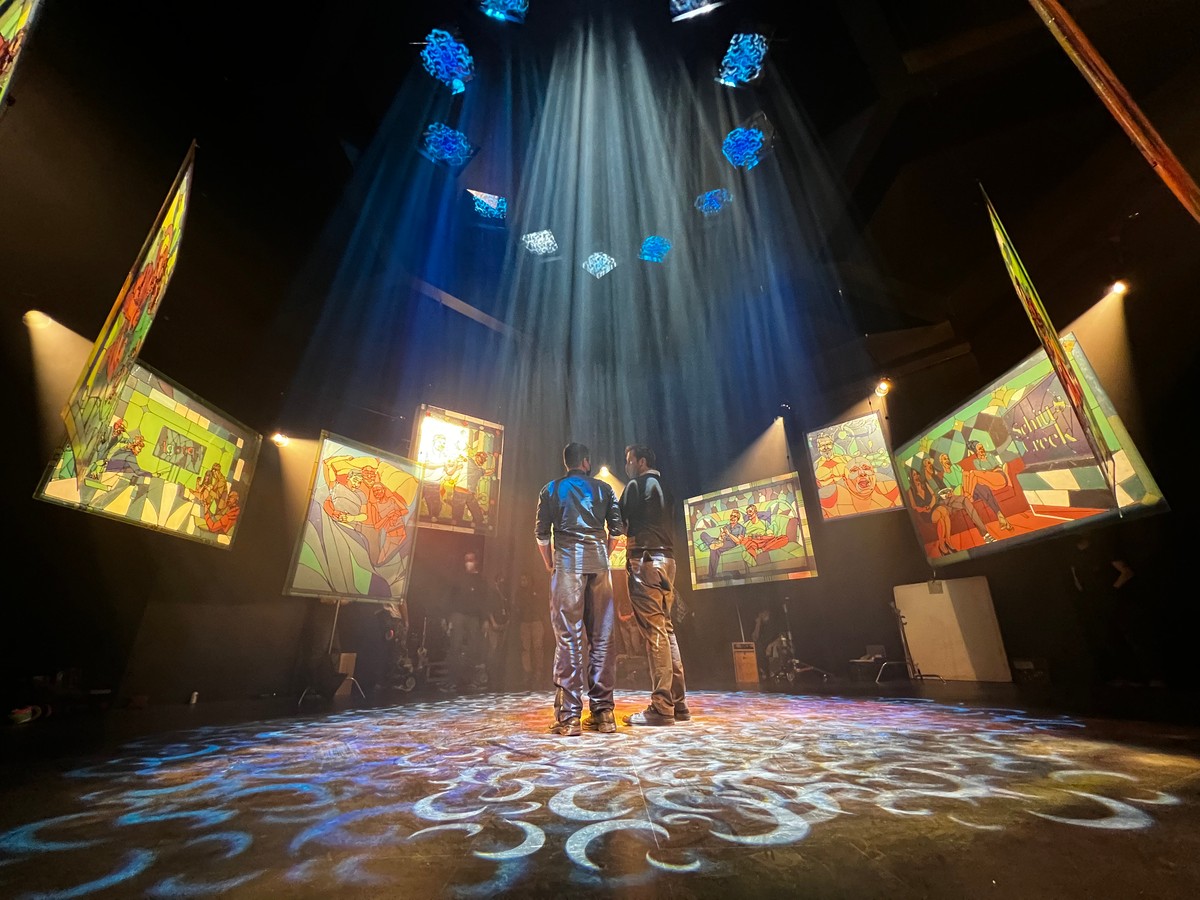
The production filmed largely on-location in New Jersey, and the central visual idea was to create a vibrant, cinematic palette by combining traditional cinematic techniques with theatrical lighting concepts. Several theatrical-style sets pulled the picture toward the latter: a fundraiser, a club scene, the finale gala, and the “eXtreme Ballpit”.
Theatrical Lighting
The moment a fixture moves, fades color, strobes, or does anything beyond simply emit light, the control problem is an order of magnitude above what film instruments require. There is some convergence in this area but the musical theater or theatrical lighting discipline remains distinct. The work also is an opportunity. Light that changes through time is not only illumination — it is storytelling. It can shape a scene the way music or performance would. Bros leaned on that opportunity extensively.
Light that changes through time is not only illumination — it is storytelling. It can shape a scene the way music or performance would.
Theatrical lighting work like this tends to find people who have come up through it. Years in film and theater taught me lighting control by collaborating with designers, watching them solve real problems on real shows, and absorbing the techniques that lighting programmers have honed into instincts. These techniques expand the film gaffer’s palette.
The complexity demands time away from the set. Test days began before the first day of principal photography.
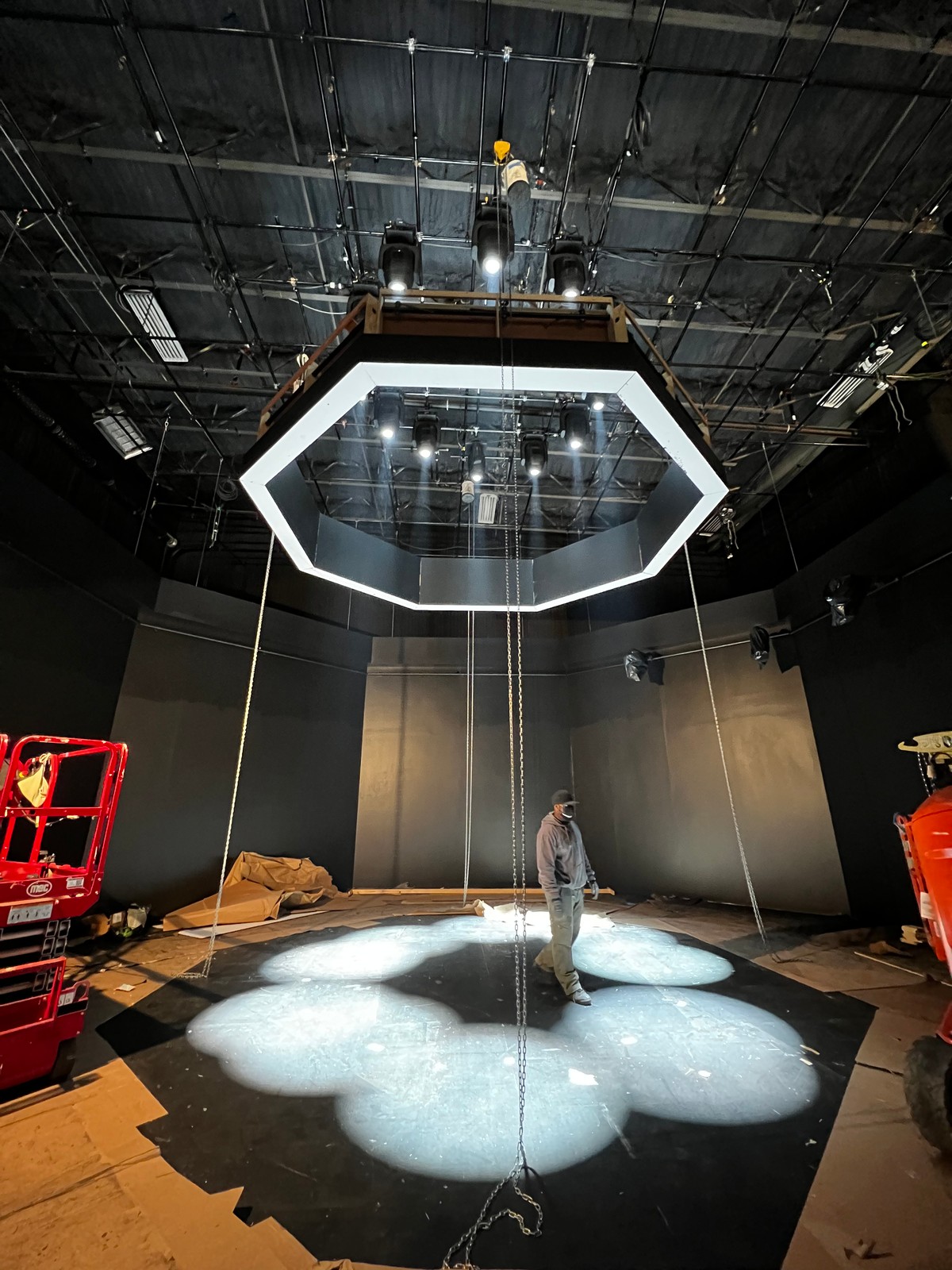
The picture combined multiple dynamic-lighting sequences throughout its schedule. One of the first was “eXtreme Ballpit”. It was part of a running comedic motif that follows our hero through multiple and increasingly ridiculous exercise and fitness experiences. We created an intentionally “over the top” strobing, ultraviolet, electrified, and shocking concept that plays entirely with non-stop light-in-motion.
As would be expected, there were a series of nightclub scenes. One of these was built with a full moving-lights rig of its own and programmed to enhance the importance of the scene.
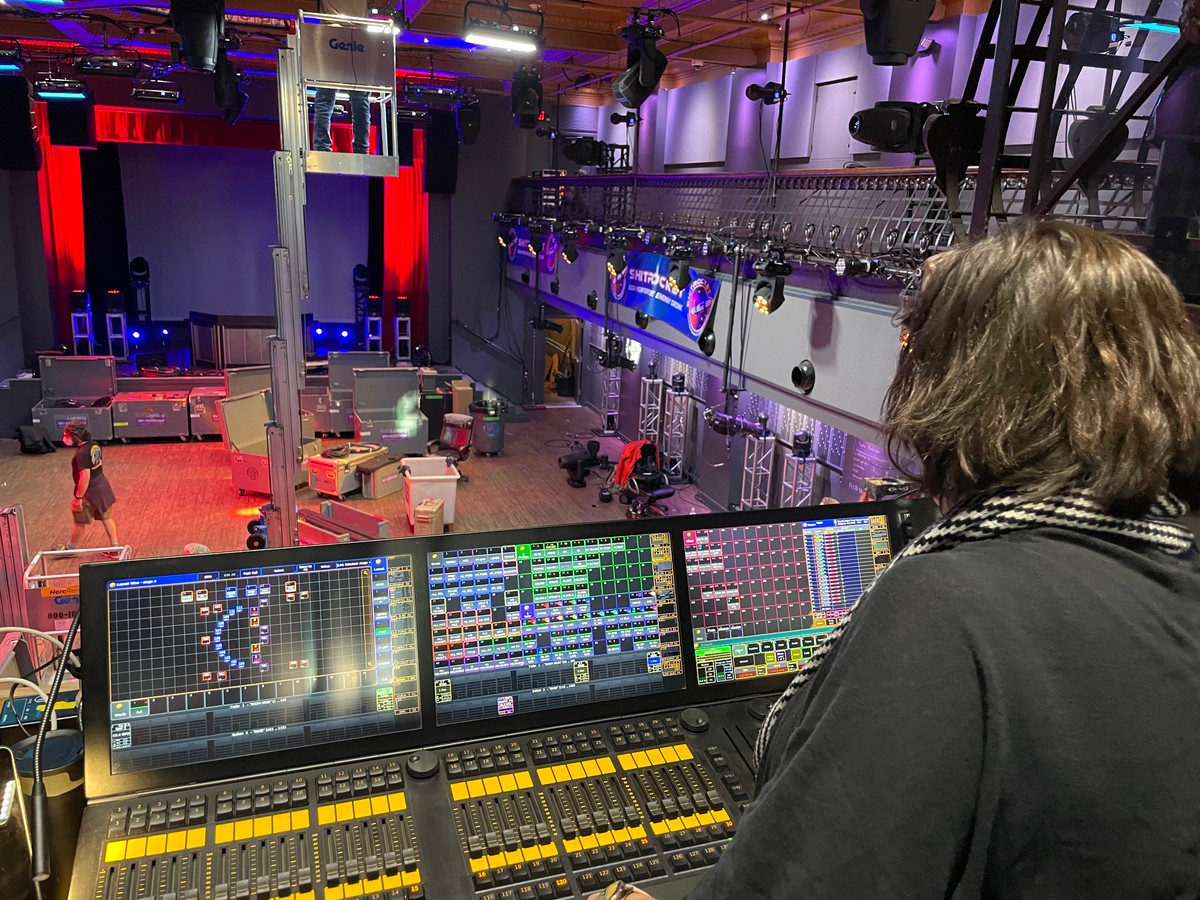
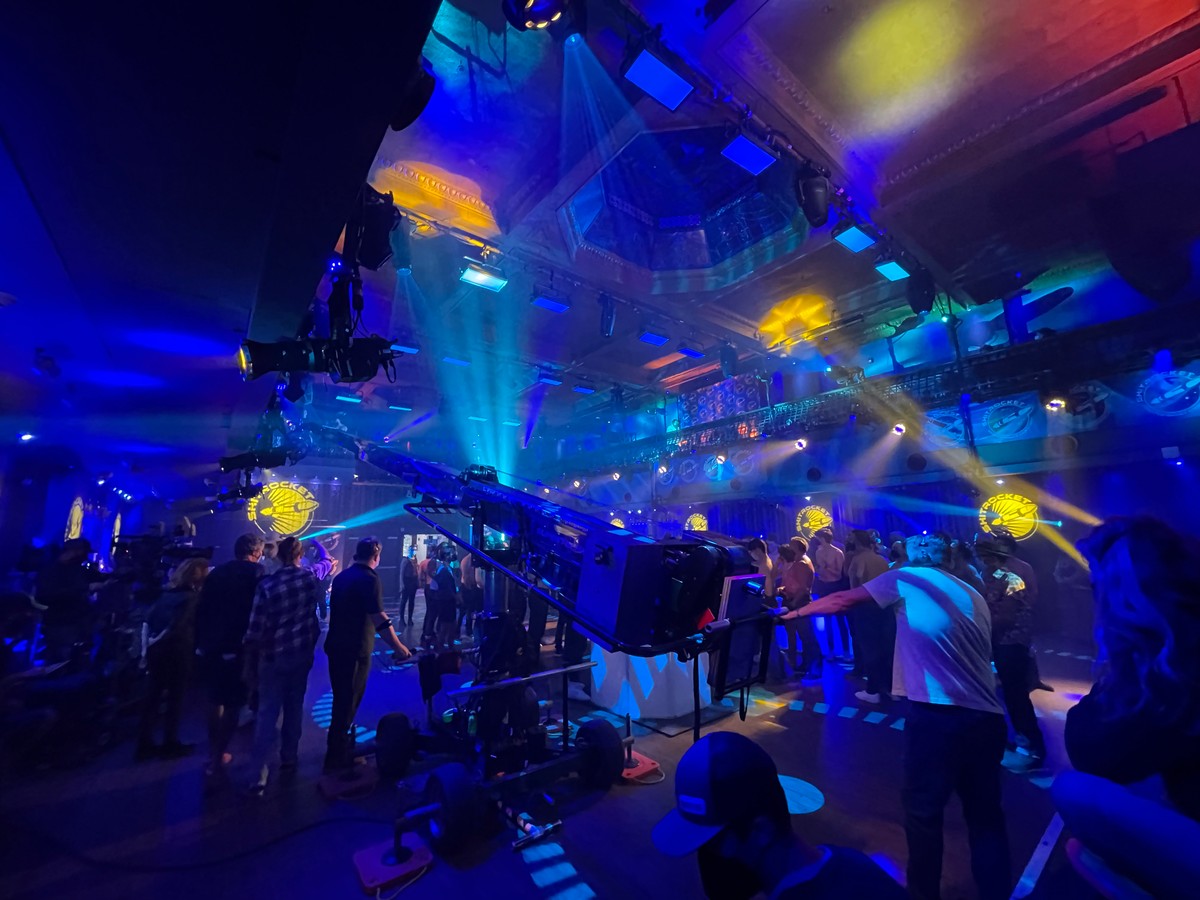
Although most of the film was captured on-location, even when on stage we incorporated a variety of moving light fixtures and theatrical techniques. A set that was scripted in the museum was built on stage instead to give more precise control over its visuals.
On-Location
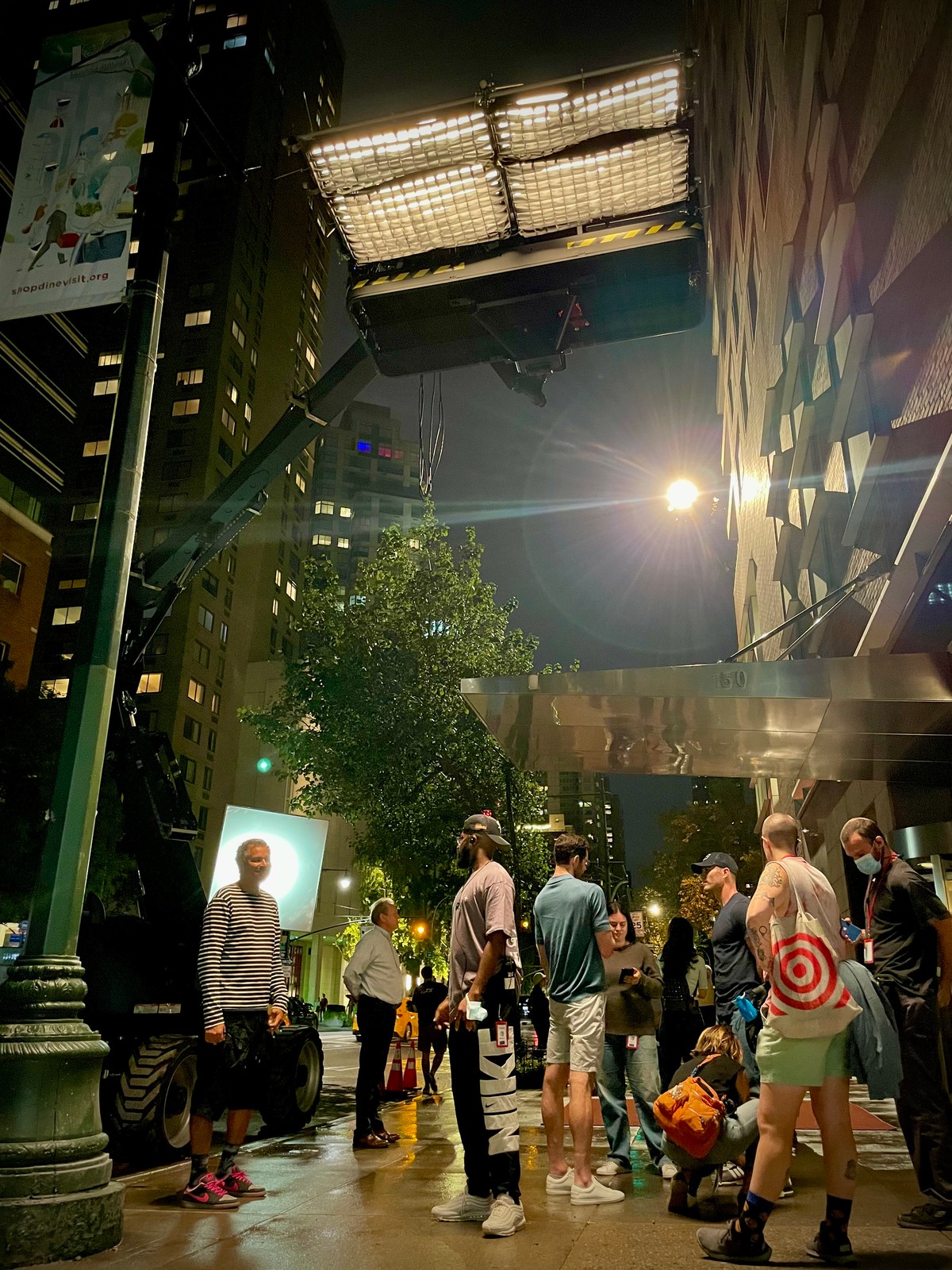
Most of Bros was filmed on-location, with parts of New Jersey playing as New York City and New England. A single day and night of filming on the streets of New York City anchored the story inside the script’s city. The Newark Museum, a historic building, was the primary location for the film’s biggest sequences: a series of fundraiser events and the finale gala.
Gala
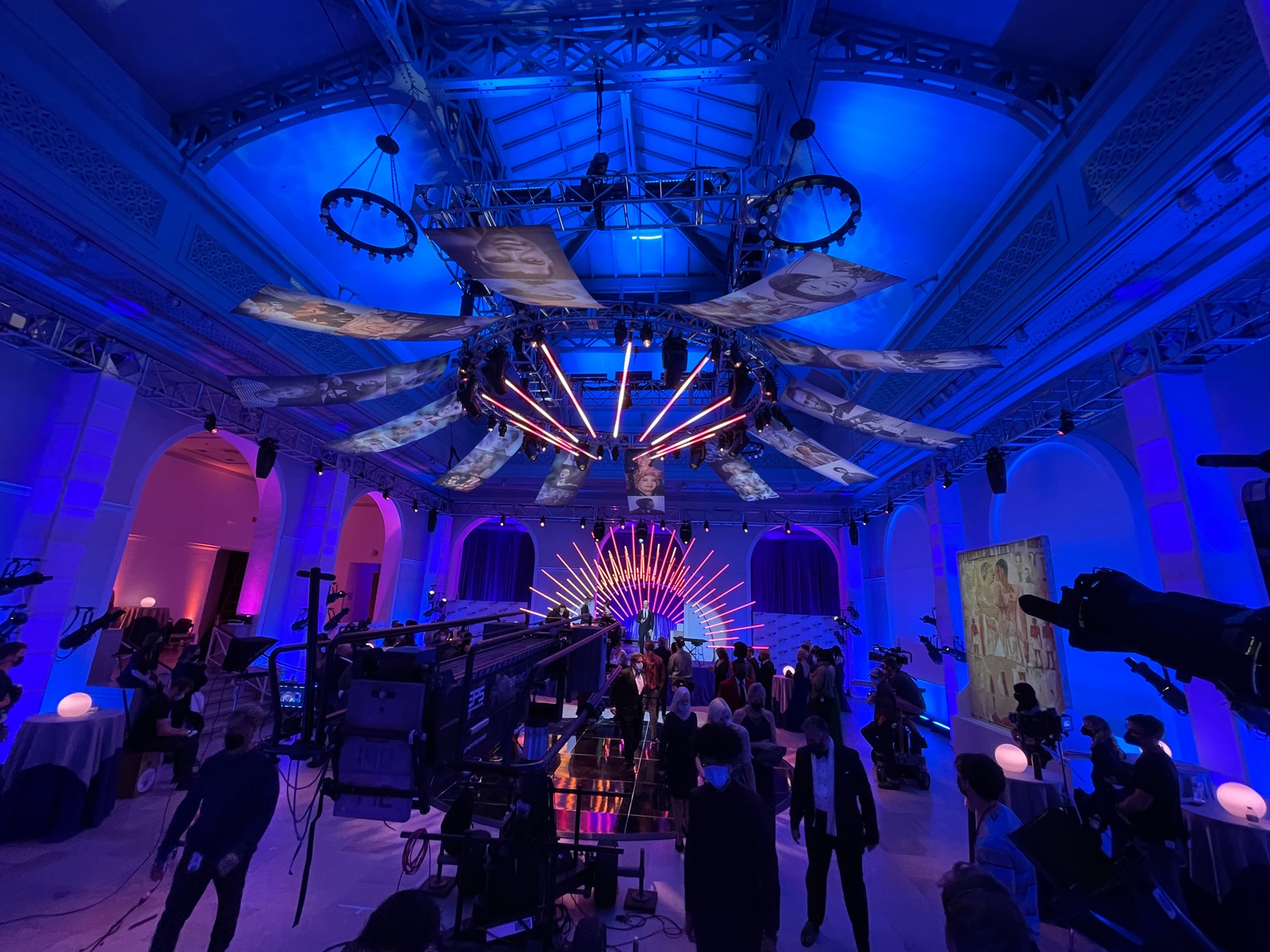
The finale was a rich, vibrant ballroom set, built around a complete overhead truss and moving lights theatrical rig that was installed on-location.
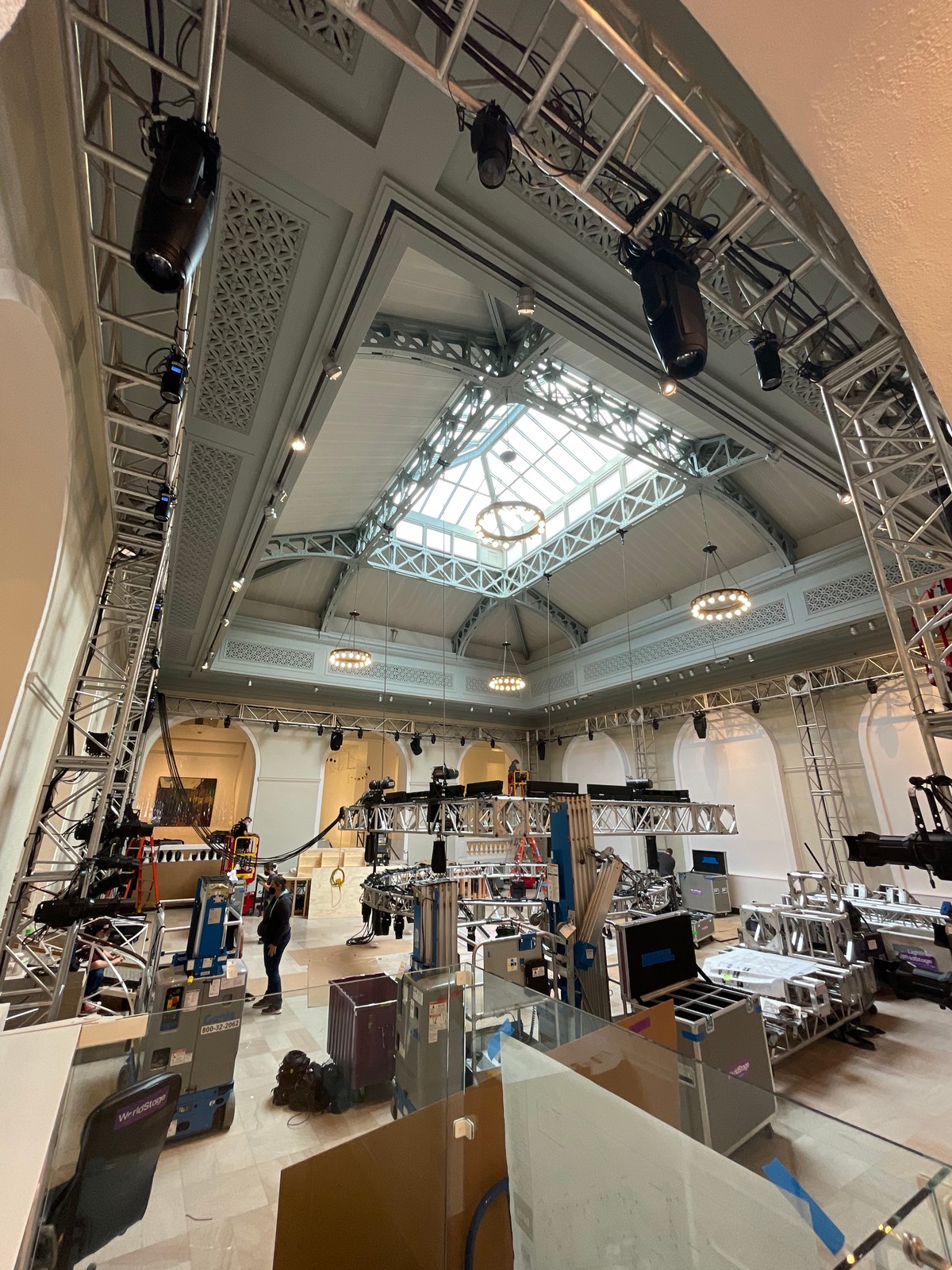
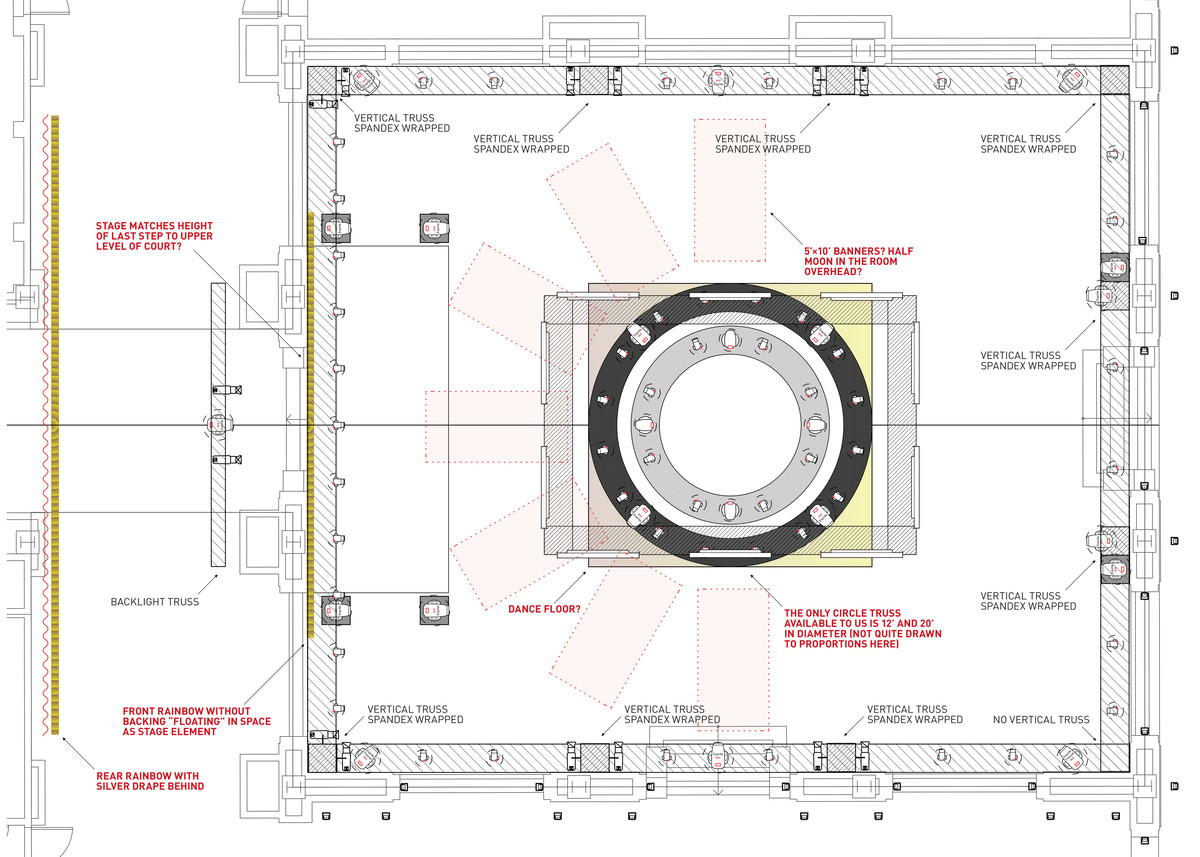
On the theatrical and moving-lights side, I collaborated with Mike Baldassari in the same style of partnership I built with Sean Beach on Pitch Perfect. Musical-theater and theatrical-lighting directors bring a set of instincts into a cinematic project that a film-only crew rarely sees, and I love working with them.
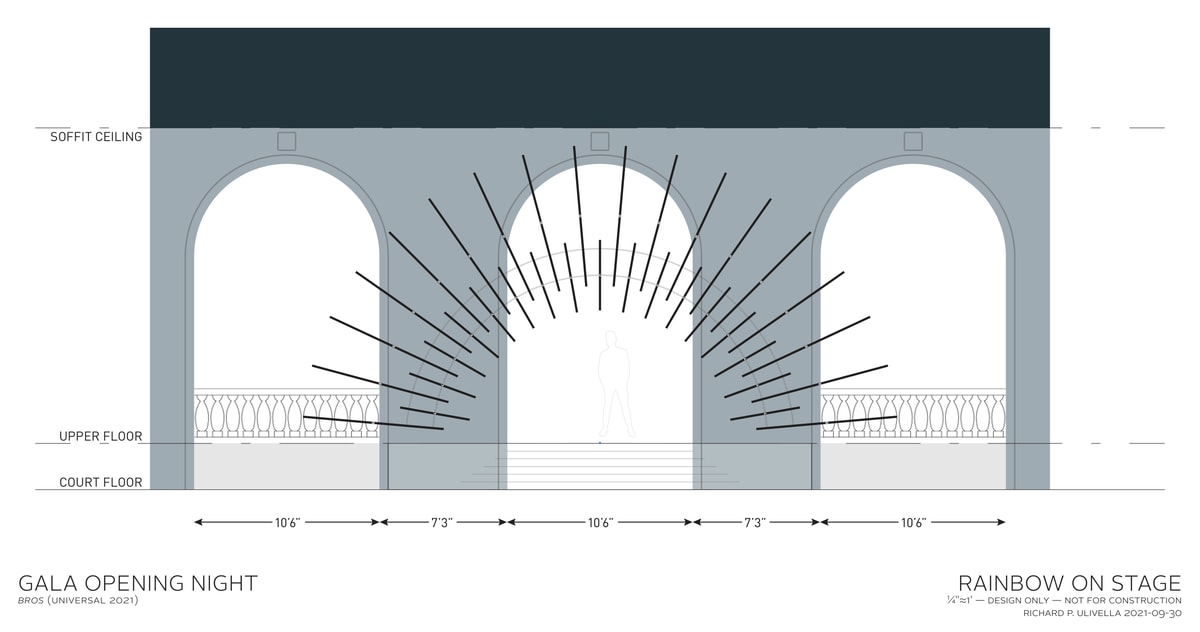
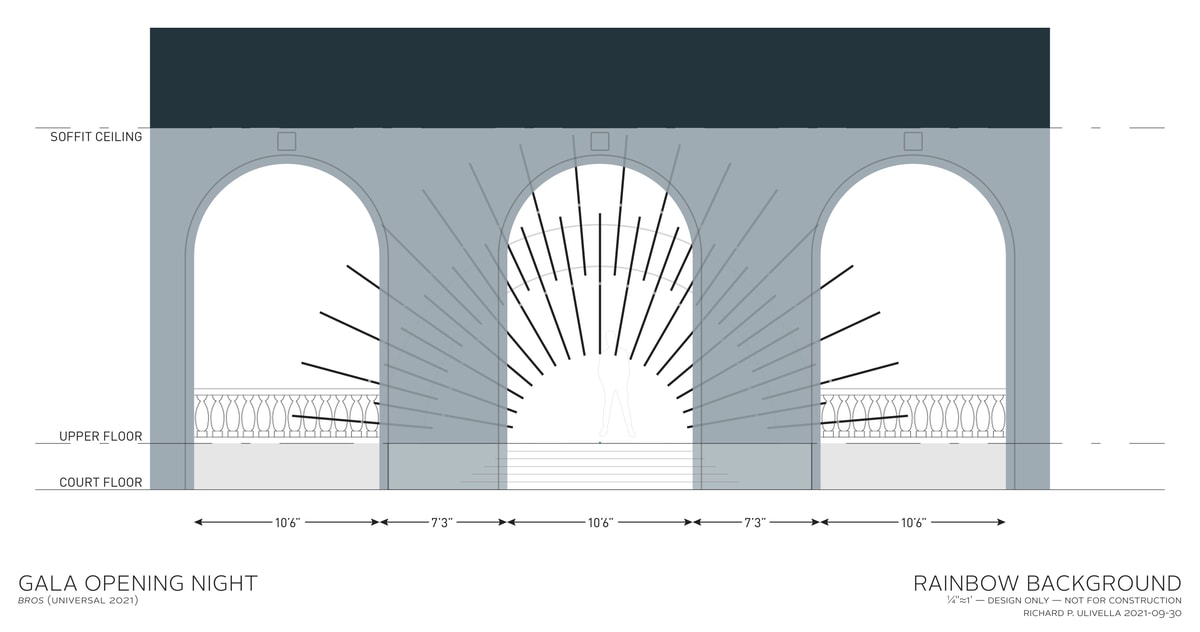
The rainbow was yet another dynamic element of the ballroom set. We first saw the concept as a bit too literal. We established stylistic guidelines so that, when programmed, the rig had no chance of reading as a literal rainbow. Instead we looked at the rainbow as an opportunity to create bursts, twinkles, glimmers, and to introduce color without the obvious patterns. It comprised Astera tube fixtures (all three sizes: Hyperion, Titan, and Helios) capable of pixel-level color and effects. I drew a number of concepts before settling on a two-layer approach for the final design. The Astera tubes enabled pixel effects with precision, and the result is magnificent.
Passionate Learners
Bros was a COVID-era production. The protocols added their own weight on top of a schedule that already was carrying theatrical-lighting demands that most film crews do not encounter day to day. Productions rarely ask a film gaffer to run programmable rigs, console-driven cues, and color-changing fixtures at this scale, and the crew was generous about closing the gap.
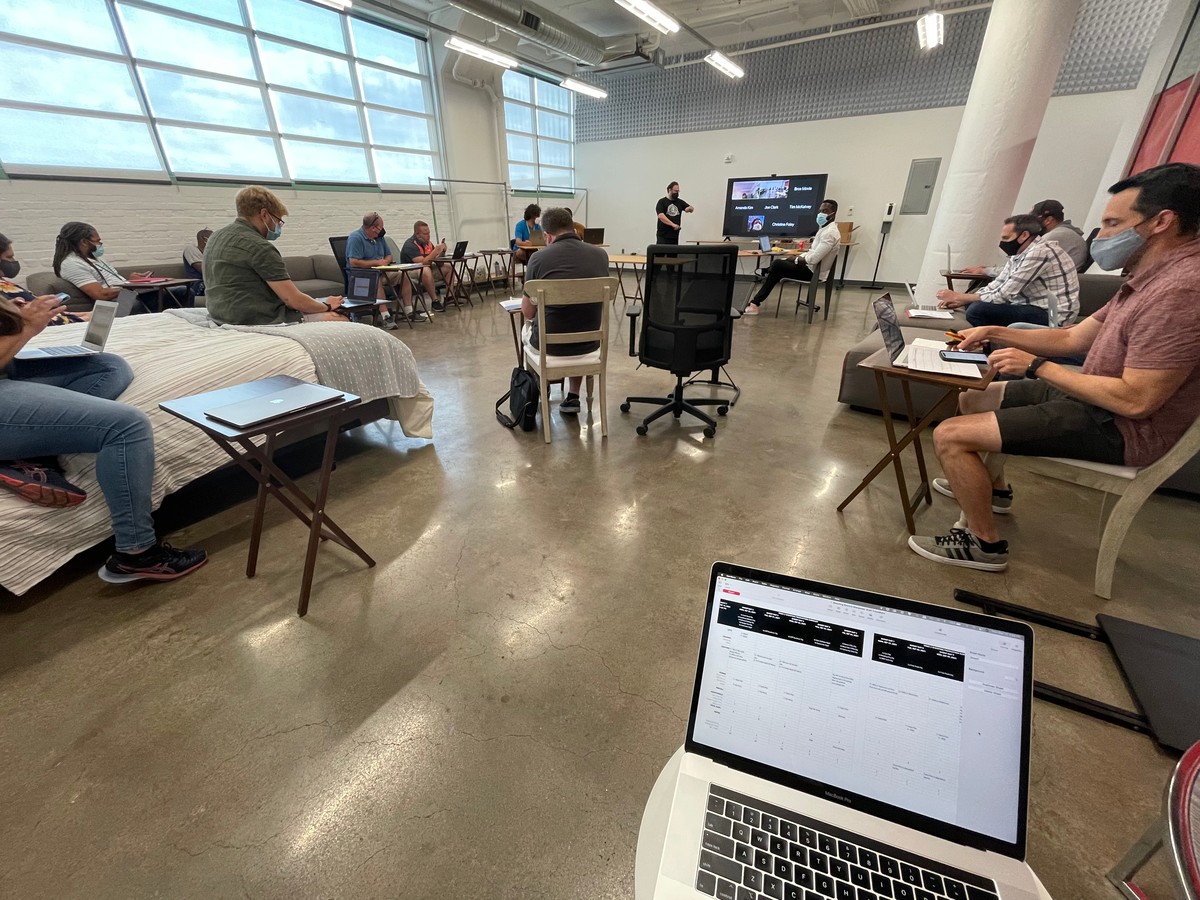
The team rallied around the work. Hire passionate learners and inspired minds, and they always will meet the challenges at hand.